
Gun Violence in Schools and Communities
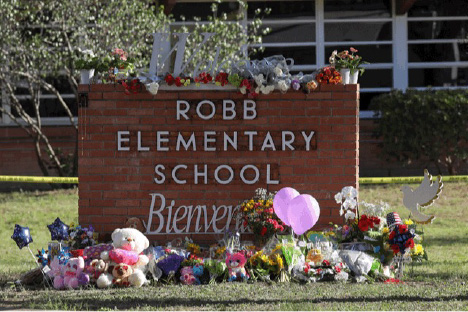 According to the Center for Homeland Defense and Security at the Naval Postgraduate School in Monterey, CA, from 2012 to the present there have been 540 school shooting incidents nationwide that resulted in at least one person killed or wounded. We’ve sunken into a deep dark well when the answer to school shootings becomes a victim of political debate. The Robb Elementary School shooting in Uvalde, Texas continues to shake the nation and the ongoing debate over the availability of assault rifles continues to showcase the fragility of America’s democracy.
The nation had not yet fully grieved the loss of 10 innocent lives in the racially motivated marketplace shooting in Buffalo, New York when a second assault weapon wielding assailant tragically murdered 19 children and two teachers in Uvalde, Texas two days before summer vacation was set to begin.
The right and expectation to return home from the grocery store and to hug your children when they run through the door after school is not a partisan issue. It is a normal, run-of-the-mill expectation in most nations. But we’ve reached a time and place in America where schools and shopping markets become heinous crime scenes in the blink of an eye. Each day 12 children die from gun violence in America and another 32 are shot or injured (New England Journal of Medicine).
Connecticut Senator Chris Murphy put into words the helplessness felt by many Americans over gun violence. “What are we doing?” he begged of his colleagues in congress. A Democrat, Murphy said he would “bend over backwards” to reach a gun rights compromise with Republicans that would lessen the likelihood of assault-weapon driven massacres from occurring. “I want to show this country that we care,” he said.
For the men and women entrusted to care for students every day, school safety is not a political issue. It is a matter of life and death, and their role as educators has never been more important. It was Maximilien Robespierre, a lawyer, statesman, and key figure in the French Revolution who said: “The secret of freedom lies in educating people, whereas the secret of tyranny is in keeping them ignorant.” So, amid the debate swirling around us as educators, despite the gripping fear school shootings fuel, educators persist.
They persist because they know the answer to the problem may be the student sitting before them today. They persist because they know intelligence must overtake ignorance. They persist because they are teachers at heart. Thank God they do because the fragility of our democracy calls for strength. Strength to pull us out of the deep dark well that we have sunken into, the strength found every day in our schools, and in everyday people. Yet, educators alone cannot fix the problem of gun violence.
As a democratic society, it is in our national interest to demand a policy response from elected leaders (and policy makers) to put children and communities first and commit to actions that reduce gun violence in schools.
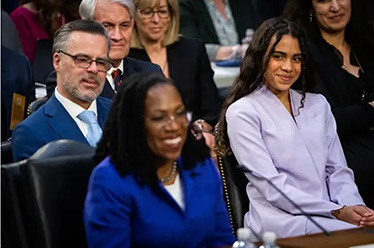 The beam of pride on the face of Leila Jackson as her mother began the first day of senate confirmation hearings, should be representative of the pride of a nation. The photo, which was published by The New York Times, quickly went viral.
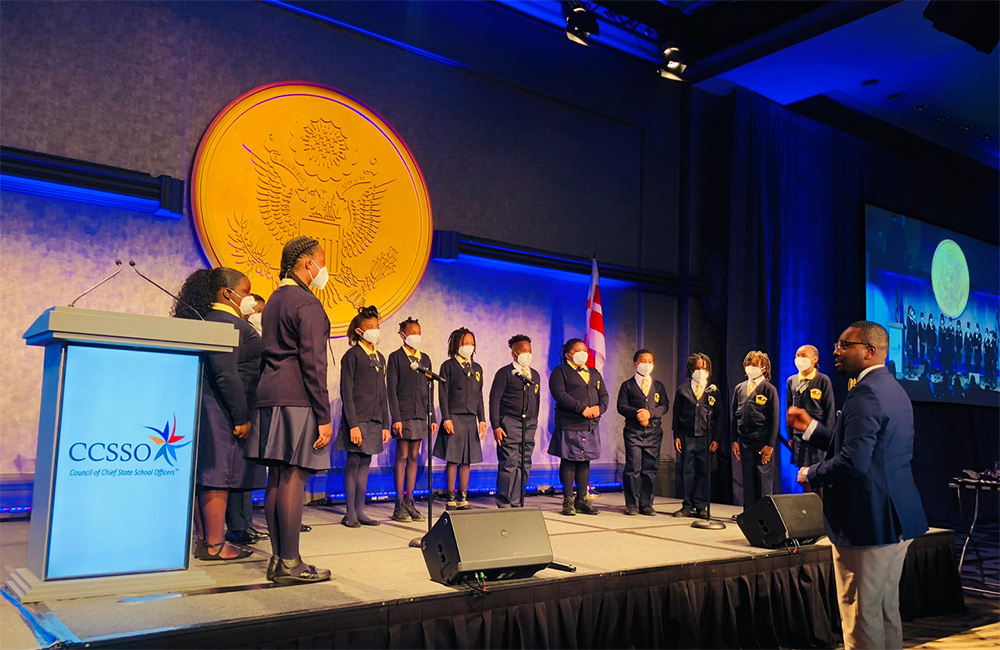 This week I had an opportunity to participate in the Council of Chief State School Officers (CCSSO) Legislative Conference in Washington, DC. CCSSO is a nonpartisan, nationwide nonprofit supporting the top education leader in every state and five U.S. territories. The Council’s core focus is on three broad priorities: Response and Recovery to include ongoing rapid response and assistance with recovery and improvement; Equity, Access, and Critical Infrastructure; and Modernizing the Education System including new education delivery models and state of the art accountability and reporting.
 Being intentional in my reflections of the past year has been a healthy way to help me grow and prepare for the new year and beyond. My mantra is that everyday I want to be a better version of myself than I was the day before, in all things, personal and professional. Below are some of the reflection questions I’ve been pondering with answers. They are not intended to be all inclusive but an opportunity to share a snippet of my reflections as I think about the new year and plan ahead.
 “I can be changed by what happens to me. But I refuse to be reduced by it.” — Maya Angelou
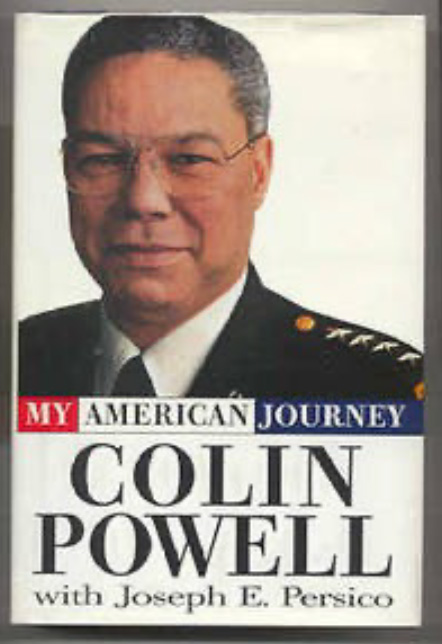 The first time I saw General Colin Powell standing at the side of President Ronald Reagan in his role as National Security Advisor at the White House, I felt as tall and proud as the four-star General looked. I saw myself reflected in his example. It was profound to see that hard work and perseverance had paid off so remarkably for someone who looked like me, and it helped fuel my fire.
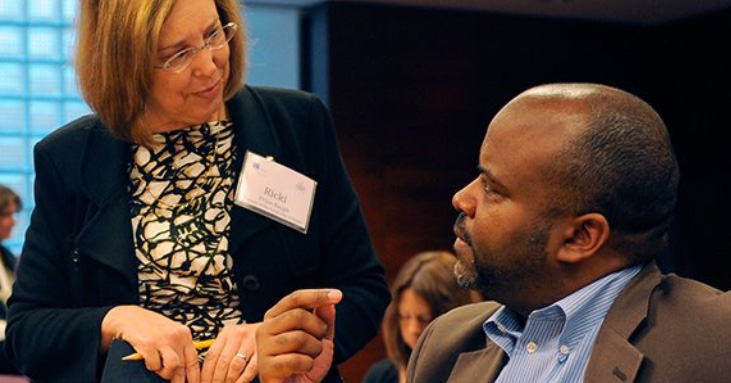 The Wallace Foundation is a national foundation dedicated to supporting and sharing best practices to expand learning and enrichment opportunities for children. As further evidence of their continued commitment, they are doubling down with an estimated $102 million investment in a new initiative to develop principal pipelines for equity-centered leaders that supports eight large, high-needs districts. See ECPI launch announcement at:
  “One of the joys of reading is the ability to plug into the shared wisdom of mankind.” — Ishmael Reed.