
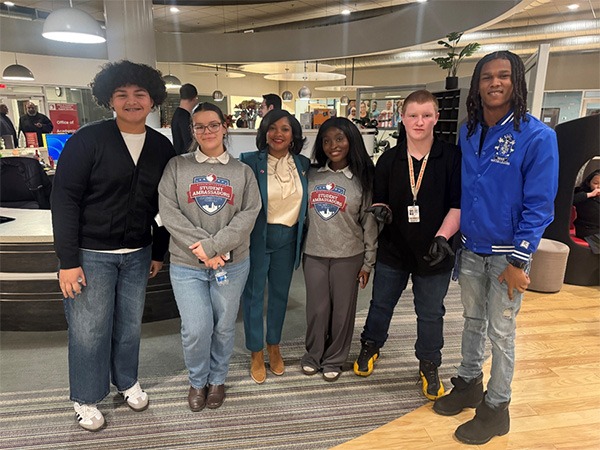
Photo courtesy of the Columbus City School District, Columbus, OH.
Across public school districts, a “Portrait of a Learner” has emerged as a powerful way to articulate what we want students to know and be able to do beyond traditional academic metrics. At its best, a Portrait moves a system from compliance to coherence—aligning vision, instruction, and culture around a shared definition of student success. Yet too often, districts stop at the vision statement. The real work—and the real impact—comes when that vision is translated into daily practice across every classroom.
Education system leaders face the real challenge of operationalizing the Portrait, not creating it.
A strong Portrait of a Learner typically reflects durable competencies: critical thinking, collaboration, communication, agency, and adaptability. These competencies resonate with families, educators, and communities. But resonance alone does not drive change. Leaders must ask: What does this look like in a 3rd-grade classroom? In a high school science lab? In a principal’s feedback conversation with a teacher?
Moving from vision to practice requires three deliberate shifts.
First, anchor the Portrait in instructional clarity. Teachers need more than aspirational language; they need concrete examples. What does “student agency” look like during a lesson? How do we observe “collaboration” in a way that is measurable and actionable? High-performing systems translate Portrait competencies into look-fors, performance tasks, and aligned rubrics. This creates a shared instructional language that reduces variability across schools.
Second, align adult systems to the student vision. A Portrait of a Learner cannot live separately from a district’s professional learning, coaching, and evaluation systems. Leaders must ensure that principal walkthroughs, teacher feedback, and professional development all reinforce the same competencies outlined in the Portrait. When adult practices mirror student expectations, coherence accelerates. When they don’t, the Portrait becomes a poster on the wall rather than a driver of change.
Third, build capacity through cycles of practice and reflection. Implementation is not an event; it is a continuous improvement process. Districts should establish routines—such as learning walks, collaborative planning, and data discussions—that focus explicitly on Portrait competencies. Over time, these routines help educators internalize the vision and refine their practice. Importantly, leaders must model this learning stance themselves, using evidence to guide decisions and adjustments.
Equally critical is engaging students and families. A Portrait of a Learner should not be something done to students, but something developed with them. When students can articulate the competencies and see them reflected in their learning experiences, the Portrait becomes authentic and empowering.
Ultimately, a Portrait of a Learner is a promise. It is a commitment to preparing students not just for tests, but for life. For system leaders, the measure of success is not the elegance of the framework, but the consistency of its implementation. When every classroom reflects the vision—when students are thinking deeply, collaborating meaningfully, and owning their learning, the Portrait has moved from aspiration to reality.
That is the work of leadership: turning vision into practice, and practice into impact.