

Uplifting Work
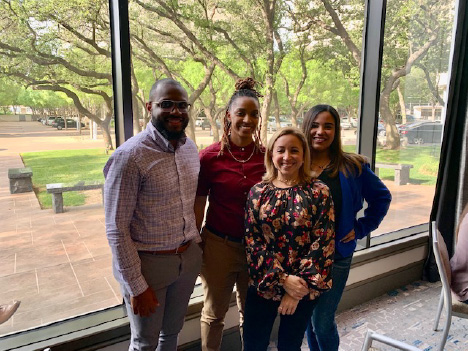
Arelis Guerrero, Senior Applications Engineer, TI, Mel McCoy, HRBP, TI, Rahland Gordon, Product Marketing Engineer, TI, and Betty Paugh-Ortiz, NCCEP VP of Programs and Partnerships
Recently, I had the opportunity to spend some time working in Akron, OH with a group of district superintendents and members of their respective leadership teams from northeast Ohio. The Ohio network is a part of the ESSA Leadership Learning Community (ELLC), a national project of the Wallace Foundation. The network provides an opportunity for state teams to learn from one another in a shared learning environment focused on equity, leadership, and sustainable school improvement. This was the network’s first in-person meeting in two years due to the COVID pandemic.
We spent the day in Akron Public Schools hosted by Superintendent Christine Fowler-Mack and her outstanding team (including students and community pathway partners) learning about the districtwide implementation of College and Career Academies. The foundation of Akron’s College and Career Academies is small learning communities, thematic learning, and strong industry sector partnerships to help design and provide real world experiences for all learners. The district’s first graduating class of this initiative will be this school year (2021-22). Here’s a 3-minute video clip of the College & Career Academies of Akron Overview – YouTube.
At the heart of this initiative are workplace learning opportunities (e.g., job shadowing and internships) integrated with academic course work to leverage student interest and improve academic achievement, student attendance, and graduation rates. One of the highlights from our discussion of this transformational work was the district’s expansion to their vision of a “Portrait of a Graduate” to include a “Portrait of an Elementary Scholar” that focuses on readiness for middle school. Part of the day included a panel with a principal, teachers, and students; notably, the elementary students could see themselves in Elementary scholar vision and articulate its relevance to their lives.
The collaborative community approach in Akron around College and Career Academies has been galvanizing to help strengthen the talent pipeline; better prepare students for college, careers, lifelong learning, and leadership; and address educational equity. As a part of the district’s College and Career Academies work, Akron Public Schools is striving to become a demonstration site as part of their partnership with the Ford Next Generation Learning network.
I also traveled to Dallas, TX recently to work with the National Council for Community and Educational Partnerships (NCCEP) and Texas Instruments (TI). NCCEP is a national non-profit dedicated to building the capacity of communities by bringing together colleges and universities with K-12 schools, foundations, and corporations among other constituencies, so that underserved students have the opportunity, skills, and knowledge to successfully pursue education and training to achieve their career and life goals.
NCCEP serves as the umbrella organization to support a federally funded college access initiative known as the Gaining Early Awareness and Readiness for Undergraduate Programs (GEAR UP). A part of NCCEP’s programming is the District Leadership Institute (DLI) that I co-facilitate, a 10-month cohort learning model to increase the capacity of GEAR UP practitioners, college access professionals, and district leaders. The NCCEP and TI partnership has been so meaningful on many levels over several years. A high point in the final DLI session for the 2021-22 Cohort was in learning about STEM careers at TI through the life experiences of three young aspiring engineers. All three panelists did an outstanding job in representing TI and in sharing their inspiring leadership journey.
“A mind that is stretched by new experiences can never go back to its old dimensions.” – Oliver Wendell Holmes, Jr.
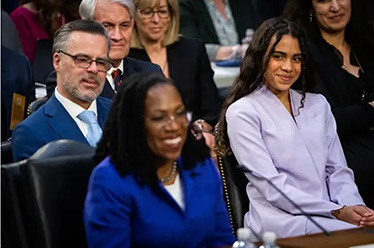 The beam of pride on the face of Leila Jackson as her mother began the first day of senate confirmation hearings, should be representative of the pride of a nation. The photo, which was published by The New York Times, quickly went viral.
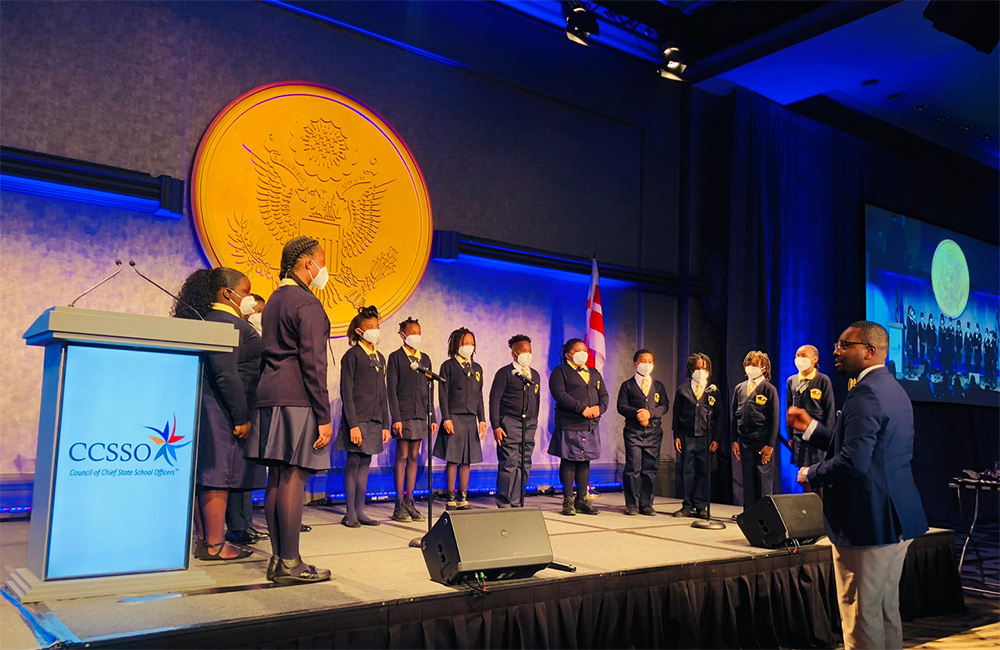 This week I had an opportunity to participate in the Council of Chief State School Officers (CCSSO) Legislative Conference in Washington, DC. CCSSO is a nonpartisan, nationwide nonprofit supporting the top education leader in every state and five U.S. territories. The Council’s core focus is on three broad priorities: Response and Recovery to include ongoing rapid response and assistance with recovery and improvement; Equity, Access, and Critical Infrastructure; and Modernizing the Education System including new education delivery models and state of the art accountability and reporting.
 Being intentional in my reflections of the past year has been a healthy way to help me grow and prepare for the new year and beyond. My mantra is that everyday I want to be a better version of myself than I was the day before, in all things, personal and professional. Below are some of the reflection questions I’ve been pondering with answers. They are not intended to be all inclusive but an opportunity to share a snippet of my reflections as I think about the new year and plan ahead.
 “I can be changed by what happens to me. But I refuse to be reduced by it.” — Maya Angelou
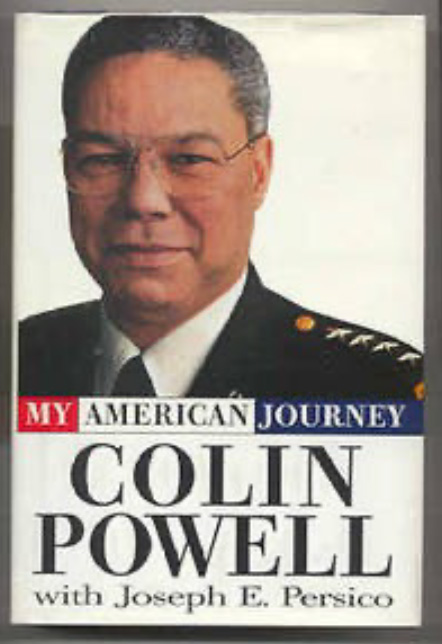 The first time I saw General Colin Powell standing at the side of President Ronald Reagan in his role as National Security Advisor at the White House, I felt as tall and proud as the four-star General looked. I saw myself reflected in his example. It was profound to see that hard work and perseverance had paid off so remarkably for someone who looked like me, and it helped fuel my fire.
 The Wallace Foundation is a national foundation dedicated to supporting and sharing best practices to expand learning and enrichment opportunities for children. As further evidence of their continued commitment, they are doubling down with an estimated $102 million investment in a new initiative to develop principal pipelines for equity-centered leaders that supports eight large, high-needs districts. See ECPI launch announcement at:
  “One of the joys of reading is the ability to plug into the shared wisdom of mankind.” — Ishmael Reed.
 When written in Chinese, the word ‘crisis’ is composed of two characters. One represents danger and the other represents opportunity. – John F. Kennedy